Creativity | Intelligence | Automation

2024-25
About Creativity | Intelligence | Automation
The Society of Fellows 2025-26 theme, Creativity | Intelligence | Automation, foregrounds the challenges and opportunities of automation and alerts us to the ethical obligations arising from the simulation of human intelligence. For example: How might the history of automation inform how we reckon with this new age? How does this moment push us to reimagine the nature of intelligence? How might we hold to account the automation of biases and erasures? Are there intelligences that should not be automated? What happens to artistic life when creative labor is automated? What other intelligences might we turn to beyond doctrines of human uniqueness?
Fellows will engage projects that compel new understandings of techno-human interdependencies and histories; automation and the politics of labor; theories of personhood; and forms of performativity, communication, learning and cultural expression. The theme focuses on how creativity, intelligence and automation operate across different scales in global contexts and within wider assemblages of biomedical, communicative, cultural, educational, environmental, geopolitical, socioeconomic, carceral and technoscientific forces and relations.
Faculty Fellows
- YuHao Chen (external fellow)
- Jennifer Eaglin (History)
- Merrill Kaplan (English + Germanic Languages and Literatures)
- Jamison Kantor (English)
- Eden Lin (Philosophy)
FACILITATOR
Kris Paulsen (History of Art)
Graduate Team Fellows
- Xiao Liu (DMA, Music)
- Fateme Mohammadi Maklavani (MFA, Design)
- Katherine Roos (PhD, Women's, Gender and Sexuality Studies)
- Jiara Sha (MFA, Dance)
- Ahura Sultan (PhD, History of Art)
- Ying-Shan Wu (PhD, East Asian Languages and Literatures)
MENTOR
Tina Tallon (School of Music)
Undergraduate Apprentices
- Surekha Garapati (Biology + Studio Art)
- Bhada Han (Women's, Gender and Sexuality Studies)
- Zydeco Lamaze (English)
- Rylee McKenzie (Art)
- Ryan Sivakumar (Neuroscience)
- Zoey Wurgess (Geography)
MENTORS
Mara Frazier (University Libraries)
Jen Schnabel (University Libraries)
EVENT SERIES
Artificial Intelligence: Propositions from the Arts + Humanities
This yearlong event series features lectures by artists and scholars whose work foregrounds the ethical obligations arising from the simulation of human intelligence and increased surveillance. These events engage the Society of Fellows 2025-26 annual theme, AI: Creativity + Intelligence + Automation.
Autumn 2025

LECTURE | "And Bells On: Sound and Surveillance" by Simone Brown
October 10, 2025, noon to 1:30 p.m. (WOSU Ross Community Studio)
Simone Browne is an associate professor in the Department of African and African Diaspora Studies at the University of Texas at Austin. Her research focuses on the social and ethical implications of surveillance, both AI-enabled and not. She is the author of the award-winning book Dark Matters: On the Surveillance of Blackness. This talk explores doorbell cameras, the apps that accompany home monitoring systems and the analytical work and interventions made by artists who creatively explore and also undo the surveillance of Black life. Moderator: Sampada Aranke, Associate Professor of History of Art and Comparative Studies

LECTURE | "Artisanal Intelligences," with Katherine Behar
November 13, 2025, 12-1:30 p.m. (WOSU Ross Community Studio)
Katherine Behar is a professor at Baruch College, City University of New York, where she heads the New Media Arts program and runs New Media Artspace. She will present excerpts from Inside Outsourcing, a multimodal project that takes the impossibility of robots making baskets as an opportunity to cultivate human/nonhuman cooperation. Behar suggests that basketry’s unique resistance to automation involves its tactile and taciturn refusal to speak — that is, to explain itself, to reduce itself by becoming simply an instruction set. Artisanal Intelligences accounts for how basketry departs from the mutual histories of fiber arts, computation and labor struggles over the automation of work. Moderator: Kris Paulsen, Associate Professor of History of Art

LECTURE | "Manufacturing Intelligence," with Dennis Yi Tenen
December 2, 2025, noon to 1:30 p.m. (Zoom)
Dennis Yi Tenen is an associate professor of English at Columbia University, where he co-directs the Narrative Intelligence Lab. Recent publications include Literary Theory for Robots (W.W. Norton, 2024) and Author Function (forthcoming, Chicago UP). A long-time affiliate of Columbia’s Data Science Institute and former Microsoft engineer and fellow at the Berkman Center for Internet and Society, Tenen’s code runs on personal computers worldwide. Tenen’s presentation will focus on the changing nature of intellectual production with AI. Moderator: Jacob Risinger, Associate Professor of English

LECTURE | "Becoming Auto" with Lauren Lee McCarthy
April 2, 2026, 4-5:30 p.m. (WOSU Ross Community Studio)
Lauren Lee McCarthy is an artist examining social relationships in the midst of automation, surveillance and algorithmic living, and she is a professor at UCLA Design Media Arts. McCarthy critiques the technological and social systems we’re building around ourselves. She explores reciprocal risk taking and vulnerability, as performer and audience are challenged to ask: Who builds these artificial systems? What values do they embody? Who is prioritized and who is targeted as race, gender, disability and class are programmatically encoded? Where are the boundaries around our intimate spaces? In the midst of ‘always on’ networked interfaces, what does it mean to be truly present? Moderator: Kris Paulsen, Associate Professor of History of Art
Spring 2026

LECTURE | Lauren Tilton, "Distant Viewing: Digital Image in the Age of AI"
March 5, 2026, 3:30-5 p.m. (Denney Hall 311)
Tilton is the E. Claiborne Robins Professor of Liberal Arts and Digital Humanities at the University of Richmond. This talk will introduce the concept of distant viewing, engage with the shifts brought about with generative AI, and then turn to how AI facilitates scholarship in areas such as art history and media studies. Moderator: Leigh Bonds, Digital Humanities Librarian (Ohio State)
WORKSHOP | Lauren Tilton, "Distant Viewing in Action"
March 6, 2026, 3-4:30 p.m. (Pomerene Hall 240)
The workshop will introduce the method of distant viewing for analyzing digital images. It will start by looking at how pixels form images, then turn to how to analyze pixels using computer vision. A combination of ready-made tools will be used, including the Distant Viewing Explorer and Python programming. No coding experience needed. Introduction: Kris Paulsen, Associate Professor of History of Art (Ohio State)

LECTURE | Tina Tallon, "Vibe Check: Sound and Surveillance in the AI Era"
March 12, 2026, Noon to 1:30 p.m. (Ohio Union-Barbie Tootle Room)
Sound, especially voice, and the vibrations that carry it are linked to electronic surveillance. Today’s dominant AI systems encode a worldview where culture is tractable as text, and the so-called “vibe” becomes a glossy proxy for the materiality of creative practice. This talk traces how the ‘vibe check’ has been operationalized tech companies and governments and how the words we use to describe cultural production are treated as data from which intentions, emotions, risk and deviance can be inferred. Moderator: Kris Paulsen, Associate Professor of History of Art (Ohio State)
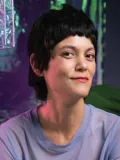
LECTURE | Lauren Lee McCarthy, "Becoming Auto"
April 2, 2026, 4-5:30 p.m. (WOSU Ross Community Studio)
McCarthy is an artist and professor at UCLA Design Media Arts who examines social relationships in the midst of automation, surveillance and algorithmic living. She critiques technological and social systems and explores reciprocal risk taking and vulnerability. Introduction: Chris Coleman, Professor of Art and Director of ACCAD (Ohio State) Moderator: Katherine Behar, Professor of New Media Arts (Baruch College)

DIGITAL DIALOGUE | "Vital Intelligences: Feminist Methodologies for AI"
April 15, 2026, 3:30-5 p.m. (Zoom)
This Digital Dialogue is between feminist Science and Technology Studies scholars Neda Atanasoski (Professor and Chair of the Harriet Tubman Department of WGSS, University of Maryland) and Jennifer Rhee (Associate Professor of English and founder and co-director of the AI Futures Lab, Virginia Commonwealth University). Atanasoski and Rhee will address feminist approaches to intelligence as embodied, unruly, and relational, while staying attentive to the material conditions that make contemporary AI possible. Moderator: Kris Paulsen, Associate Professor of History of Art (Ohio State)