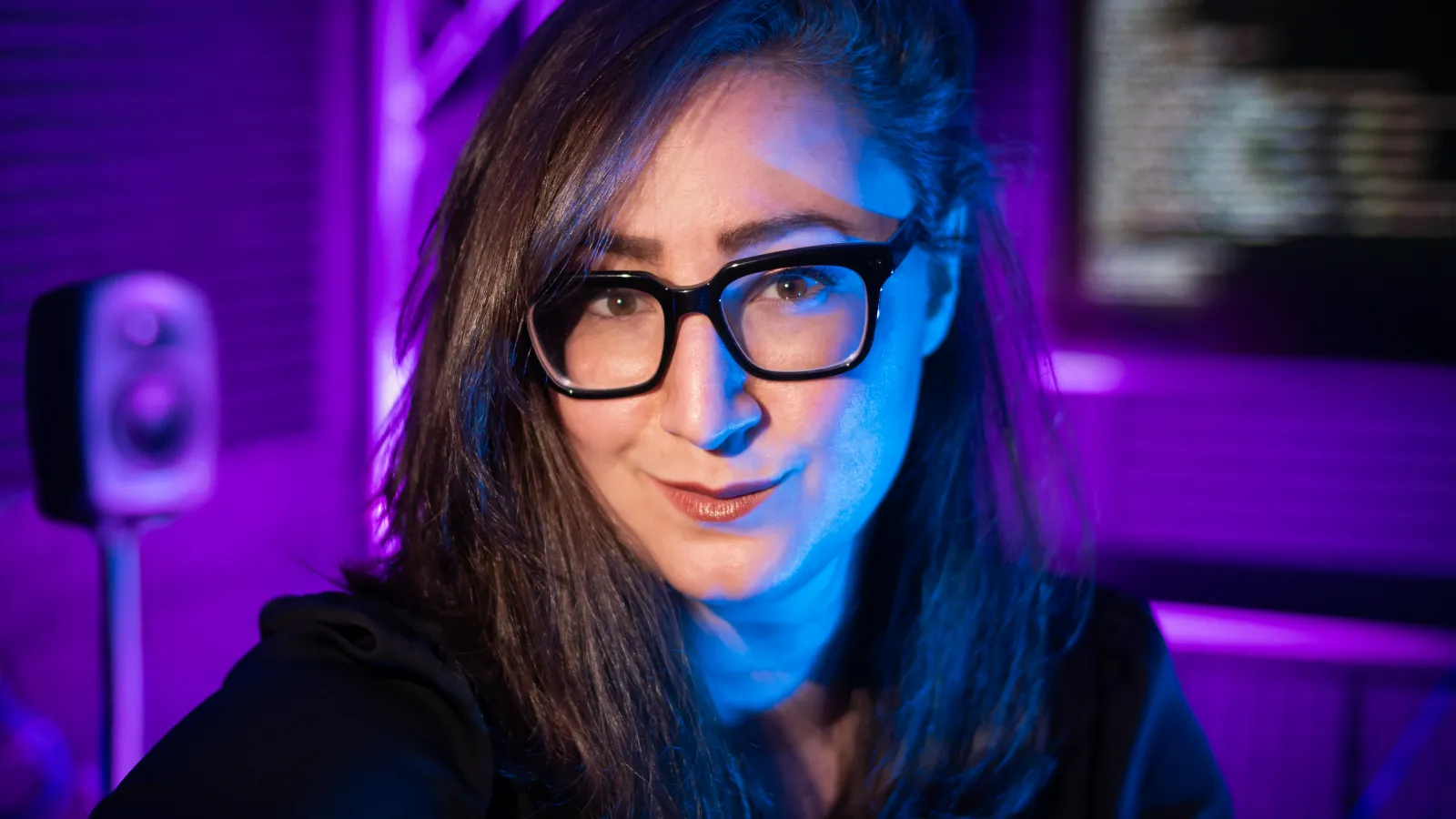
This lecture is part of the Global Arts + Humanities' Society of Fellows 2025-26 event series, "Artificial Intelligence: Propositions from the Arts + Humanities" — a series of lectures by artists and scholars whose work foregrounds the ethical obligations arising from the simulation of human intelligence and increased surveillance.
When the electric burglar alarm was invented in 1853, it failed to gain popularity. People were skeptical of electrifying their doorframes and window panes, and the infrastructure for centralized monitoring didn’t exist. However, the dawn of telephony 20 years later and its consequent expanded webs of wires weaving their way across New England made monitoring more feasible: because phone lines were primarily used during the day, they could be used at night to monitor the alarm systems. Sound (and the voice in particular) and the vibrations that carried it became inextricably linked to electronic surveillance.
The vibe took on a new significance during the COVID‑19 pandemic. We increasingly relied on digital platforms for connection, while exhaustion, overwhelm and grief often left us with few words. We were keenly aware that “the vibes were off,” while “no thoughts just vibes” became an aspirational state of carefree escape. The “vibe check” stood as an informal, affective judgment: Do you belong here? Are you safe? Are you suspicious? However, beneath the surface, the vibe and the multimodal data associated with it (text, images, audio, video) gained popularity as a way of rendering rich complexity legible to the algorithms that prioritize and reward concise textual descriptors, ushering in a new paradigm of surveillance capitalism.
For musicians, the paradox between the vibe’s origins as an immersive, ineffable physical phenomenon (i.e. a literal vibration) and its modern utility as a textual stand‑in for complexity may seem particularly uncanny. However, this disconnect is consistent with post‑war AI research trajectories which largely privilege linguistic and symbolic models of cognition over embodied ones. As a result, today’s dominant AI systems encode a worldview in which culture becomes tractable as text, and the vibe becomes a lossy proxy for the specificity and materiality of creative practice. The vibe check has been operationalized by entities ranging from tech companies to governments, and the words we use to describe cultural production are increasingly treated as data from which intentions, emotions, risk, and deviance can be inferred.
Moderator: Kris Paulsen, Associate Professor of History of Art (Ohio State)