Why Cross-Disciplinary Research Matters | Interview with Momar Ndiaye

Momar Ndiaye (MN) was interviewed by Graduate Administrative Assistant Allison Hargett (AH)
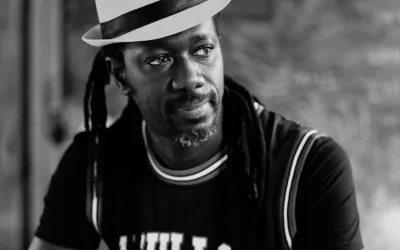
AH: How are cross-disciplinary perspectives or methods important to your current project?
MN: My work as a multidisciplinary dance artist investigates embodied expressions of alienation, resilience, transgression and resistance that emerge in response to Western cultural subordination in African societies. Through choreography, film and archival practices, I examine how the body becomes a site where socio-political tensions and cultural negotiations are performed and reimagined.
My current project focuses on dandyism in the Democratic Republic of Congo, specifically the Society of Ambianceurs and Elegant Persons (SAPE). Rather than approaching this movement as a mere fashion phenomenon, the project situates it as a historically-grounded cultural practice that raises critical questions about identity formation, social hierarchy and postcolonial subjectivity. I propose a documentary film that examines the SAPE subculture as a multilayered performance through which individuals negotiate visibility, dignity and social belonging.
In regions of Congo marked by political instability and economic precarity, the Sapeur’s aesthetic — men wearing expensive suits, colorful combinations, and making highly stylized gestures — functions as a deliberate intervention challenging dominant narratives of poverty and marginality. Here, elegance operates as a complex symbolic language that is aspirational, ironic, defiant and politically expressive. To view SAPE solely as fashion is to obscure the deeper social and historical forces shaping its aesthetic values, and to miss how it highlights the tension between limited income and conspicuous consumption.
To capture this complexity, a cross-disciplinary approach is necessary. It should combine artistic practice with anthropological methodology and historiographic inquiry. This approach helps illuminate how everyday performance and sartorial expression relate to broader questions of freedom, agency and cultural identity in postcolonial contexts.
AH: What do you see as the major challenges of conducting cross-disciplinary research? What do you find most rewarding?
MN: Challenges are often time and financial resources. Projects of this nature require both strategic planning and a high degree of adaptability. Meaningful engagement between the researcher and the communities being studied is essential, and extensive investigation across multiple theoretical and methodological frameworks is often necessary — especially when direct collaboration is not feasible. Such work demands that researchers contribute their expertise but remain open to learning from others. It requires careful observation, attentive listening and awareness of potential cultural biases that may shape interpretation. Researchers must question their own assumptions, accept critique and operate with humility. This process often means stepping beyond familiar intellectual or cultural comfort zones.
Financial constraints present another challenge. Adaptive research processes do not always align with fixed budgets, as unforeseen circumstances often require adjustments that can strain available resources.
These challenges, when overturned, are rewarding. They foster intellectual growth and expand methodological perspectives. By gathering multiple analytical frameworks, such projects enable a deeper excavation of complexity. Each perspective can provide a foundation for more specialized research within the field.
AH: What ethical considerations drive your interests in cultural identity and hybridization?
MN: Any discussion of cultural identity and hybridization must consider the power dynamics that shape cultural exchange, particularly for communities and societies that have experienced colonialism and sociocultural imperialism. Within this context, I juxtapose the concepts of interculturalism, globalization and Négritude to complicate interpretations of cultural interaction and transformation.
Interculturalism and globalization are often presented as processes that promote exchange and connectivity. However, they may also act as contemporary forms of cultural imperialism supported by dominant economic powers. In many cases, these dynamics have destabilized the social and cultural foundations of African societies. This has left communities with few alternatives beyond cultural adaptation that often mirrors Western models. In contrast, Négritude offers a philosophical framework rooted in both cultural affirmation and openness, especially within the historical context of former French colonies.
While cultures are never static — human societies continually interact, exchange and develop new ways of living — ethical cultural inquiry must carefully distinguish between adaptation driven by coercive historical conditions and changes resulting from adoption or transformation. My methodological and ethical commitment is to decenter Western perspectives. This approach helps to demystify dominant narratives and encourages more accurate representations. Ultimately, it fosters a more nuanced understanding of acculturation, appropriation and appreciation within intercultural discourse.